


Meta Ads vs Google Ads:
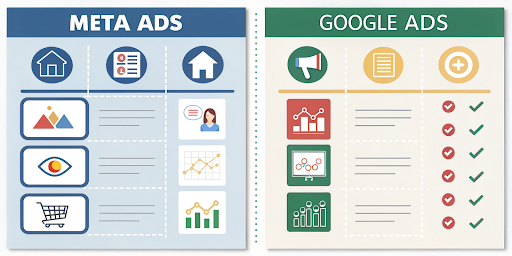
In the world of digital advertising , Meta Ads ( formerly Facebook Ads ) and Google Ads are two of the most popular platforms . Both offer powerful tools for targeting potential customers , but they differ significantly in terms of approach , ad formats , targeting , and campaign objectives . In this blog , we' ll explore the key differences between Meta Ads and Google Ads , helping you decide which platform is better suited for your business needs .
1. Platform Reach and Audience
Meta Ads allows you to advertise across Facebook, Instagram, Messenger, and the Meta Audience Network. With over 2.8 billion active users, Meta Ads provides access to a vast social media ecosystem. The platform is ideal for brand awareness campaigns and engaging with users in a more interactive, community-driven way.
Google Ads, on the other hand, offers a broader reach across Google Search, the Google Display Network, YouTube, and other Google properties. Google Ads targets users based on their intent, leveraging search queries to display highly relevant ads. This makes Google Ads particularly effective for capturing users actively looking for a product or service.
2. Targeting Capabilities
The targeting options on both platforms are extensive, but they operate differently:
- Meta Ads: The platform is known for its detailed demographic, behavioral, and interest-based targeting. You can target users based on their age, location, interests, behaviors, and even specific activities on Meta platforms. This makes Meta Ads great for building awareness and targeting a niche audience based on their social media activity.
- Google Ads: Google Ads primarily operates based on keyword-based targeting. Advertisers bid on relevant keywords, and ads are shown when users perform searches related to those keywords. Additionally, Google Ads offers contextual targeting across the Google Display Network and the use of audience lists for remarketing.
3. Ad Formats
Meta Ads provides a variety of ad formats, including image-based banner ads, carousel ads, video ads, and even Instagram stories. The emphasis is on visually engaging content that can easily be integrated into the user's social feed, making it suitable for creative campaigns and product promotions.
Google Ads offers search ads, display ads, shopping ads, and video ads on YouTube. Google’s text-based search ads are often preferred by businesses looking to capture high-intent users actively searching for their products or services.
4. User Intent and Ad Placement
Meta Ads targets users based on their interests, behaviors, and demographics, often when users are casually browsing or engaging with content on social media. This makes Meta Ads effective for brand awareness, promotions, and re-engagement campaigns.
Google Ads excels at capturing high intent. For example, a user searching for "digital marketing course in Lucknow " is likely looking to enroll in a course. Google Ads can display relevant ads that directly match the user’s search intent, leading to better conversion rates and measurable ROI.
5. Cost and Budgeting
Both platforms offer flexible budgeting options, but their cost structures differ:
- Meta Ads: Generally offer lower cost-per-click (CPC), especially when you focus on brand awareness campaigns or target broader demographics. However, costs can rise depending on your targeting precision and the competition in your niche.
- Google Ads: While also cost-effective, Google Ads can be more expensive for highly competitive keywords. The cost-per-click is influenced by factors like keyword competition, location, and device type. For example, e-commerce companies targeting popular search terms may see higher costs.
6. Measuring Success and ROI
Both platforms provide comprehensive ad reporting tools to help track the success of your campaigns, but the approach differs:
- Meta Ads: Uses Meta Ads Manager for detailed insights into ad performance, engagement, and audience interactions. You can monitor metrics like likes, shares, comments, and reach, helping you measure the effectiveness of your campaign in engaging users.
- Google Ads: Offers Google Ads Manager, providing data on impressions, clicks, conversions, and search term reports. Google Ads excels at showing measurable ROI, especially for search campaigns, where you can track user actions directly after clicking on your ad.
7. Best Use Cases
Meta Ads is ideal for brand awareness, lead generation, and engaging users with rich visuals. It's a perfect platform for businesses aiming to reach a broad audience and build a connection through social interaction.
Google Ads is best suited for direct response campaigns where users are actively searching for a solution. If you want to target high-intent users ready to convert, Google Ads provides the best opportunity for driving sales and conversions.
Choosing Between Meta Ads and Google Ads
When choosing between Meta Ads vs Google Ads, it ultimately comes down to your advertising goals. If you’re looking to drive conversions from users actively searching for your products, Google Ads may be the better option. However, if you want to build a strong online presence and engage with users in a more creative way, Meta Ads is the way to go.
Ultimately, successful digital advertising often involves a combination of both platforms to reach users at different stages of their buyer journey. For businesses targeting high-intent users and aiming for measurable results, Google Ads excels, whereas Meta Ads offers fantastic opportunities for ecommerce brands and businesses focused on brand awareness and community engagement.
.gif "Coding Clave Academy")