


Traditional vs.
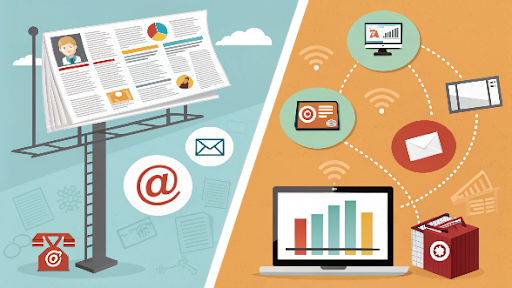
In today's rapidly evolving marketplace, businesses face the critical decision of choosing between traditional marketing and digital marketing strategies . Understanding the distinctions between these two approaches is essential for crafting an effective marketing strategy .
Traditional Marketing
Traditional marketing encompasses conventional methods that have been utilized for decades to reach a broad audience . These methods include :
- Print Advertisements: Ads in newspapers, magazines, brochures, and flyers .
- Broadcast Media:Television and radio commercials .
- Outdoor Advertising:Billboards, posters , and transit ads .
- Direct Mail:Promotional materials sent directly to consumers' mailboxes .
- Telemarketing:Direct phone calls to potential customers .
Digital Marketing
Digital marketing leverages online platforms and digital technologies to engage with target audiences . Key components include :
- Search Engine Optimization (SEO ): Enhancing website visibility on search engines .
- Content Marketing:Creating and sharing valuable content to attract and retain customers .
- Social Media Marketing:Utilizing platforms like Facebook , Instagram , and Twitter to promote products or services .
- Email Marketing :Sending targeted emails to nurture leads and maintain customer relationships .
- Pay-Per-Click (PPC) Advertising:Paid ads that appear on search engines and other platforms .
Comparative Analysis:
| Aspect | Traditional Marketing | Digital Marketing |
|---|---|---|
| Audience Reach | Targets a broad, often local audience through mass media channels. | Enables precise targeting of specific demographics and interests globally. |
| Interactivity | Primarily a one-way communication channel with limited audience interaction. | Facilitates two-way communication, allowing for real-time engagement and feedback. |
| Measurability | Challenging to measure effectiveness and return on investment (ROI) accurately. | Provides detailed analytics and metrics for performance assessment. |
| Cost | Often involves higher costs for production and distribution. | Generally more cost-effective with options for various budget sizes. |
| Adaptability | Less flexible; changes require significant time and resources. | Highly adaptable; campaigns can be adjusted quickly based on performance data. |
Choosing the Right Strategy
Selecting between traditional and digital marketing depends on various factors :
- Target Audience: Identify where your potential customers spend their time .
- Budget: Assess the financial resources available for marketing efforts .
- Marketing Goals: Define clear objectives, whether it's brand awareness, lead generation , or sales .
- Industry : Consider industry norms and where competitors are focusing their efforts .
.gif "Coding Clave Academy")